

The Lost Art of the Cheap Summer
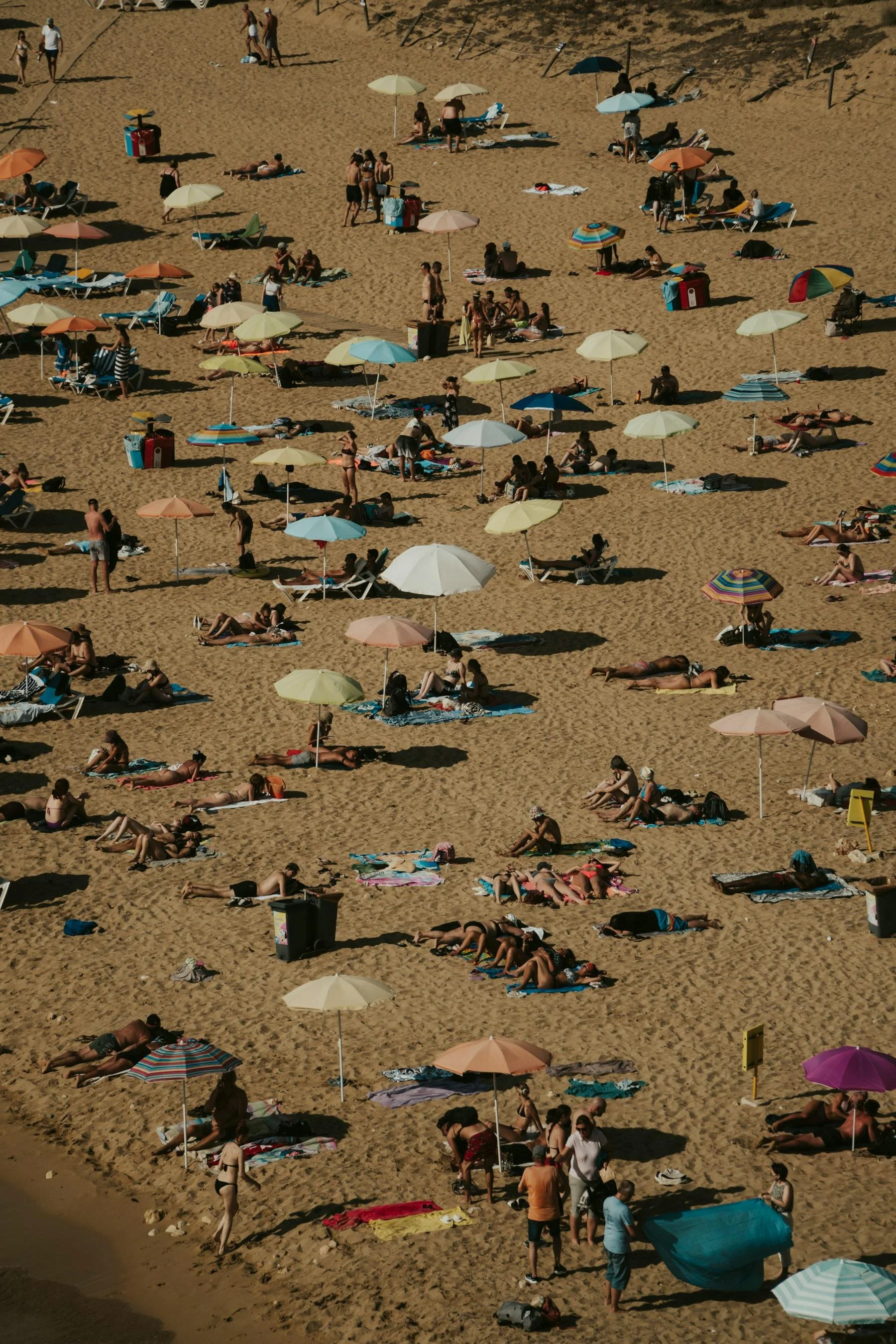
A busy Maltese beach scene with sunbathers and colorful umbrellas on a sunny day.
There was a time when summer announced itself with the sound of sprinklers ticking across front lawns and the damp shock of running through them barefoot before dinner.
Afternoons stretched beneath the glow of television marathons and rattling box fans. Siblings watched Nickelodeon for hours simply because it was too hot outside to do much else. Shopping malls became temporary refuges from the heat, we wandered slowly past food courts, fountain coins, and storefront air conditioning with little obligation to buy anything at all.
Paperback novels swelled softly at the corners from humid air and chlorinated hands. Tomato sandwiches, salted heavily, mayonnaise slipping onto the plate, appeared around noon beside sweating glasses of iced tea. Supermarket peaches ripened in paper bags on kitchen counters. Libraries filled with children escaping the heat one fluorescent aisle at a time, leaving with stacks of Judy Blume and Boxcar Children books and reading program stickers.
By evening, folding chairs emerged from garages and trunk backs like seasonal furniture native to asphalt. Families carried cooler to little league games, outdoor concerts, and fireworks viewed from parking lots and roadside hills. Someone always brought cheap hot dogs. Condensation gathered on the barrel-shaped mustard bottle. The air smelled of cut grass, gasoline, and sunscreen. Even boredom had texture then: sticky, slow-moving, cicada-loud.
Summer once belonged, almost by default, to public life and inexpensive pleasures. It unfolded in parks, at public pools, at drive-ins, on porches and stoops, beneath box fans, and under thunderstorms. Its rituals were modest enough to repeat until they became inseparable from the season itself.
But somewhere along the line, summer became expensive.
Not suddenly, and not entirely. But gradually, almost imperceptibly, the season shifted from something inhabited to something performed. Summer has become a series of reservations, ticket links, airport photos and carefully documented weekends. Leisure hardened into aspiration.
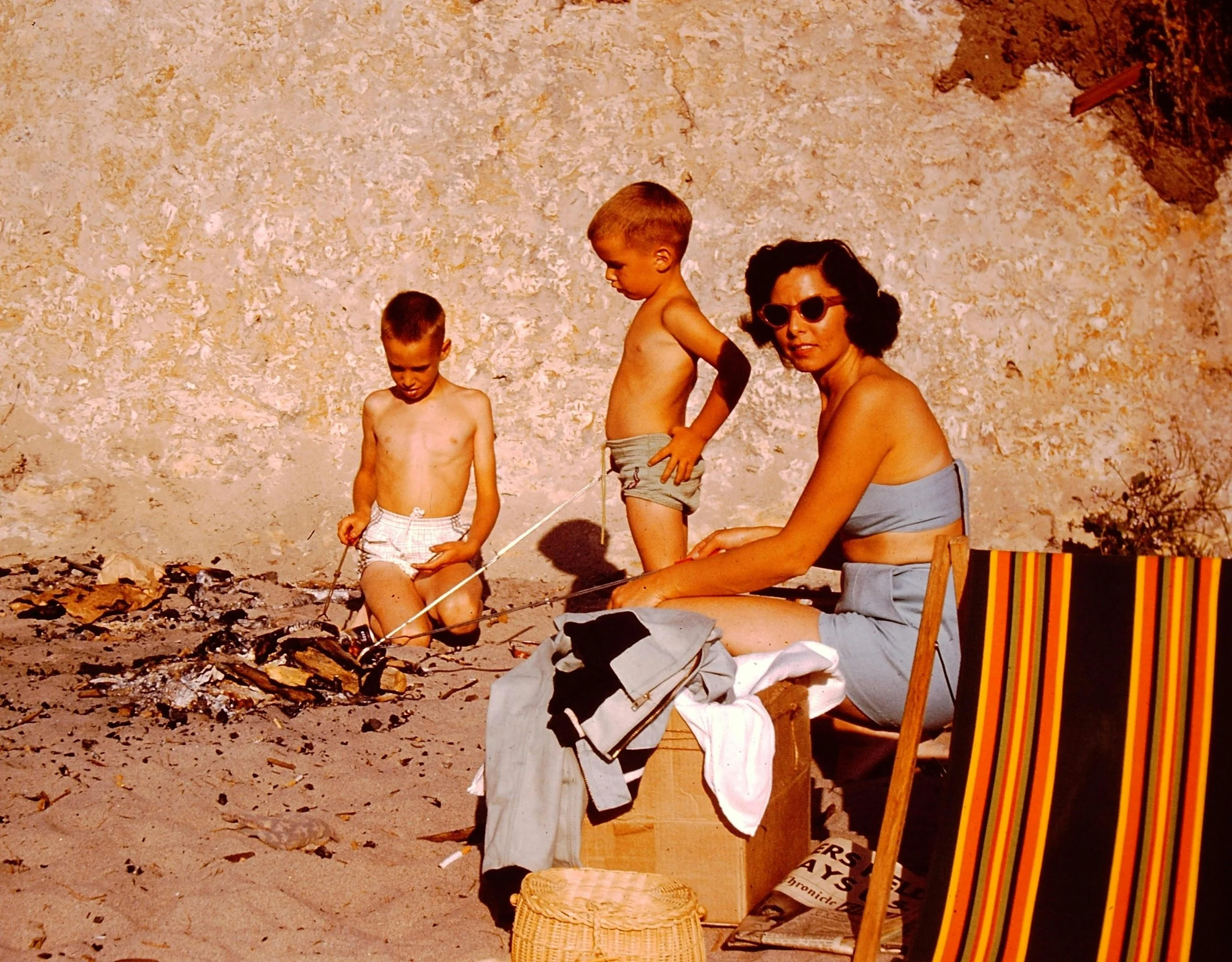
Mother and sons enjoying a beach campfire on a sunny day.
The Death of the Cheap Summer
Summers now require the kind of budgeting once reserved for major holidays. Concerts that were once casually woven in now arrive tiered, sponsored and dynamically priced. Even the small pleasures have price tags that have drifted upward: a patio brunch, a beach parking permit, a movie ticket, an iced coffee. Especially painful as the contemporary summer also unfolds against a backdrop of growing economic unevenness.
One timeline fills with yacht charters, boutique hotels and carefully documented European coastlines while another quietly recalculates grocery totals in parking lots before going inside. Layoffs ripple through industries once considered stable. Rent absorbs larger portions of income. And yet the pressure to appear effortless persists. Social media compresses radically different financial realities into the same endless scroll, creating the sense that leisure should remain abundant and aesthetically pleasing regardless of circumstance.
Summer now arrives pre-photographed, filtered through TikTok itineraries, Hamptons packing lists, Amalfi Coast mood boards and refrigerator restock videos assembled with the precision of short films. Entire categories of leisure increasingly seem designed less for enjoyment than for evidence. The season asks not merely to be experienced but documented, optimized and displayed back to one another in real time.
This visibility has altered the emotional architecture of summer. A free afternoon can begin to feel strangely insufficient when measured against a constant stream of rooftop dinners, group vacations and elaborate themed gatherings sponsored by brands or stitched together for content. The old markers of the season, watermelon eaten over the sink, rereading a favorite book at the public pool, sitting outside after dark because the house is too warm, struggle to compete with the polished velocity of contemporary aspiration.
Essentially, we've stopped inheriting summer and started curating it.
Not intentionally, perhaps. But somewhere between the rise of lifestyle branding and the collapse of boredom, the season became another arena for self-construction. Summer transformed into a backdrop for personal optimization: better bodies, better trips, better aesthetics, better stories to tell in September. Consumption expanded to fill the space once occupied by ritual. And yet, for all the abundance of recommendations and purchasable experiences, many people seem curiously starved for the feeling summer once provided so effortlessly: looseness, repetition, idleness, surprise.
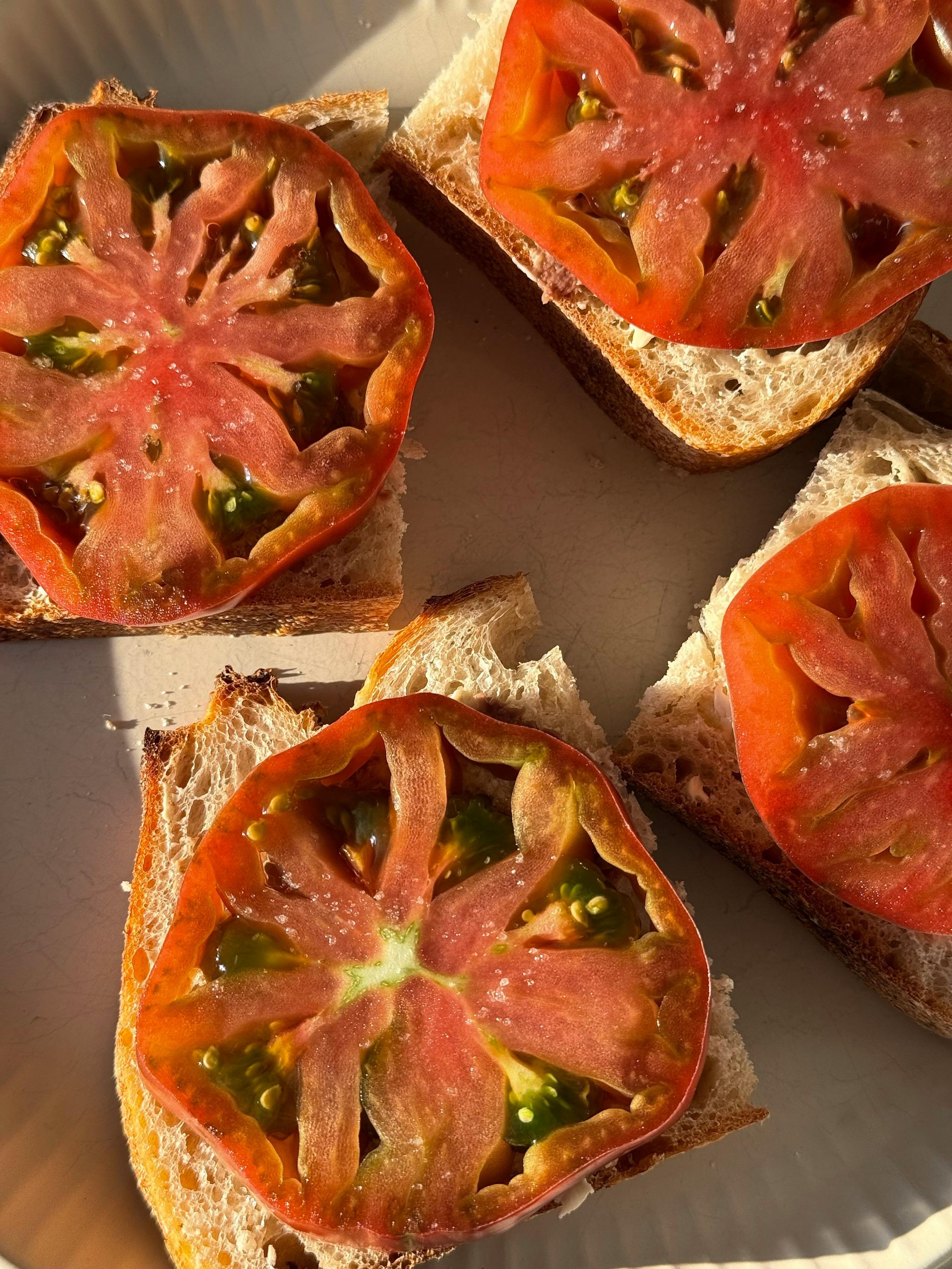
Tomato sandwich by Olha Maltseva.
Food That Tastes Like Summer
The cheap summer is not really about deprivation, nostalgia or rejecting pleasure outright. It is about recovering forms of leisure that are repeatable, communal and emotionally sustaining without requiring constant optimization. And for many people, the easiest place to begin is with food because its rituals are already waiting, mostly unchanged. They do not require expertise or aspiration, so much as repetition and attention.
A tomato sandwich once a week while tomatoes are good. Watermelon kept cold in the refrigerator during heat waves. Corn bought from the same roadside stand all August. Popsicles in the freezer for afternoons that feel too hot to salvage properly.
Summer food is at its best when barely cooked.
Not simply because kitchens become unbearable in July, but because the season itself supplies enough abundance already. Summer eating has traditionally depended less on transformation than recognition, identifying the brief period when certain foods taste exactly as they should and returning to them repeatedly before they disappear again. Tomatoes with enough acidity to demand white bread and mayonnaise. Supermarket peaches and cherries. Soft serve beginning to melt before it reaches the car. Grocery store cake eaten outdoors from flimsy paper plates while fireworks detonate somewhere in the distance.
The cheap summer is built, in part, from foods that resist optimization. Diner breakfasts or simple scrambled eggs and fried potatoes at home before the day becomes fully hot. Tinned fish picnics assembled from bread, mustard, pickles, and cold fruit. Hot dogs wrapped in foil and brought to the park. None of it especially curated. None of it requiring advance planning or a reservation. These foods belong to a style of eating organized around atmosphere rather than performance.
And atmosphere, increasingly, may be the thing people are actually hungry for.
Not restaurant exclusivity or elaborate consumption, but the feeling of eating drippy fruit on a back step before a thunderstorm, sniffing the petrichor. Of carrying melting ice cream down a boardwalk as a treat. Or tucking into a packed cooler sandwich and salty potato chips after swimming all afternoon. These foods become memorable not because they are extraordinary, but because they return often enough to attach themselves to the emotional structure of the season itself.
This doesn't mean you need to necessarily cook more or spend less with militant discipline, the idea is to simply allow certain modest pleasures to recur often enough that they begin to shape the rhythm of the season. To buy the peaches again. To keep the popsicles stocked. To eat outside whenever possible. To let dinner remain casual enough that people linger afterward in folding chairs long after the plates have been cleared or tossed into the bin.
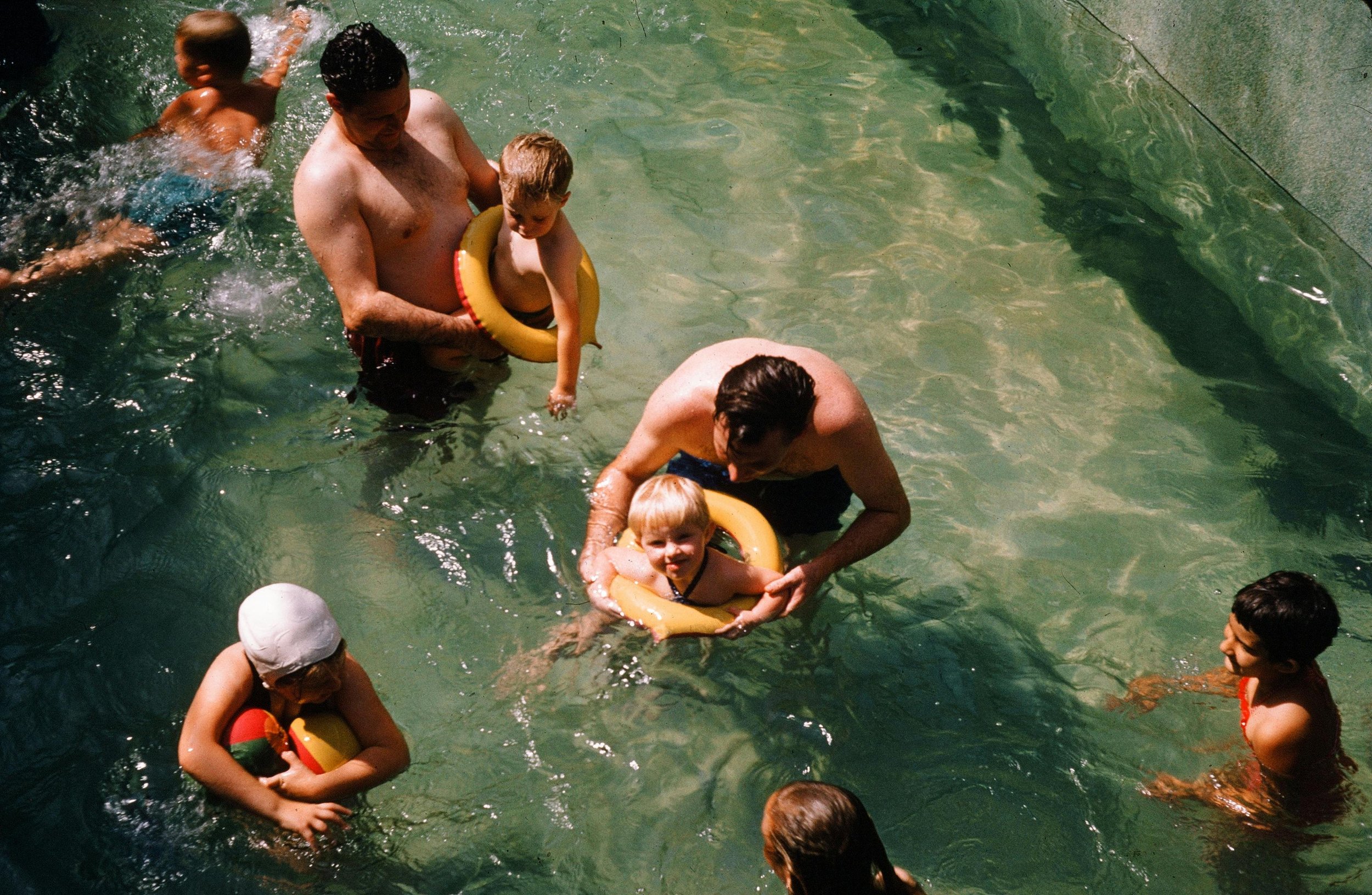
Families at the public pool by Bridgid Johnston.
The Public Summer
Eventually, nearly every cheap summer drifts outward.
Not necessarily grand civic space, but shared space. The places people drift toward repeatedly during warm weather without needing to justify their presence there. Libraries cooled by overworked air conditioning. Public pools crowded with children carrying damp towels and flip flops. Parks filled slowly toward evening with folding chairs and portable speakers. Front stoops. Porches. Walking trails at dusk. Outdoor concerts where half the audience has brought their own sandwiches.
For much of the last century, summer unfolded collectively almost by accident. People encountered one another simply by being outside. Teenagers lingered at basketball courts. Neighbors appeared gradually after dinner. County fairs and block parties interrupted ordinary routines with a kind of temporary public intimacy. Even boredom was often communal.
Many of these spaces still exist, though they are increasingly overshadowed by private, monetized versions of leisure. Rooftop memberships replace public pools. Boutique fitness replaces evening walks. Vacation content eclipses the local park two blocks away. The result is not merely economic division, but a subtle erosion of shared seasonal life and third spaces. Summer becomes fragmented into individualized experiences rather than a collectively inhabited atmosphere.
And yet the appeal of public summer persists precisely because it offers something contemporary life often struggles to provide: unstructured coexistence.
A botanical garden on a hot afternoon. A free outdoor movie where children run in front of the screen. Reading at the library until the temperature drops slightly outside. Sitting on a porch long enough to recognize the rhythms of a neighborhood again. These activities are inexpensive not only in financial terms, but in psychological ones. They ask very little performance from the people participating in them.
We may need to simply relearn how to spend time somewhere without turning the outing into an event. Returning to the same park repeatedly instead of searching for the perfect one. Keeping a library card active. Bringing dinner to the park instead of reserving a table. Walking after dark without a destination beyond cooler air.
The public summer thrives on recurrence and visibility. The familiar lifeguard chair. The same neighbors appearing outside. The kid selling lemonade down the street. Over time, these repetitions create a feeling increasingly rare in modern life: belonging to a season not privately, but alongside other people.
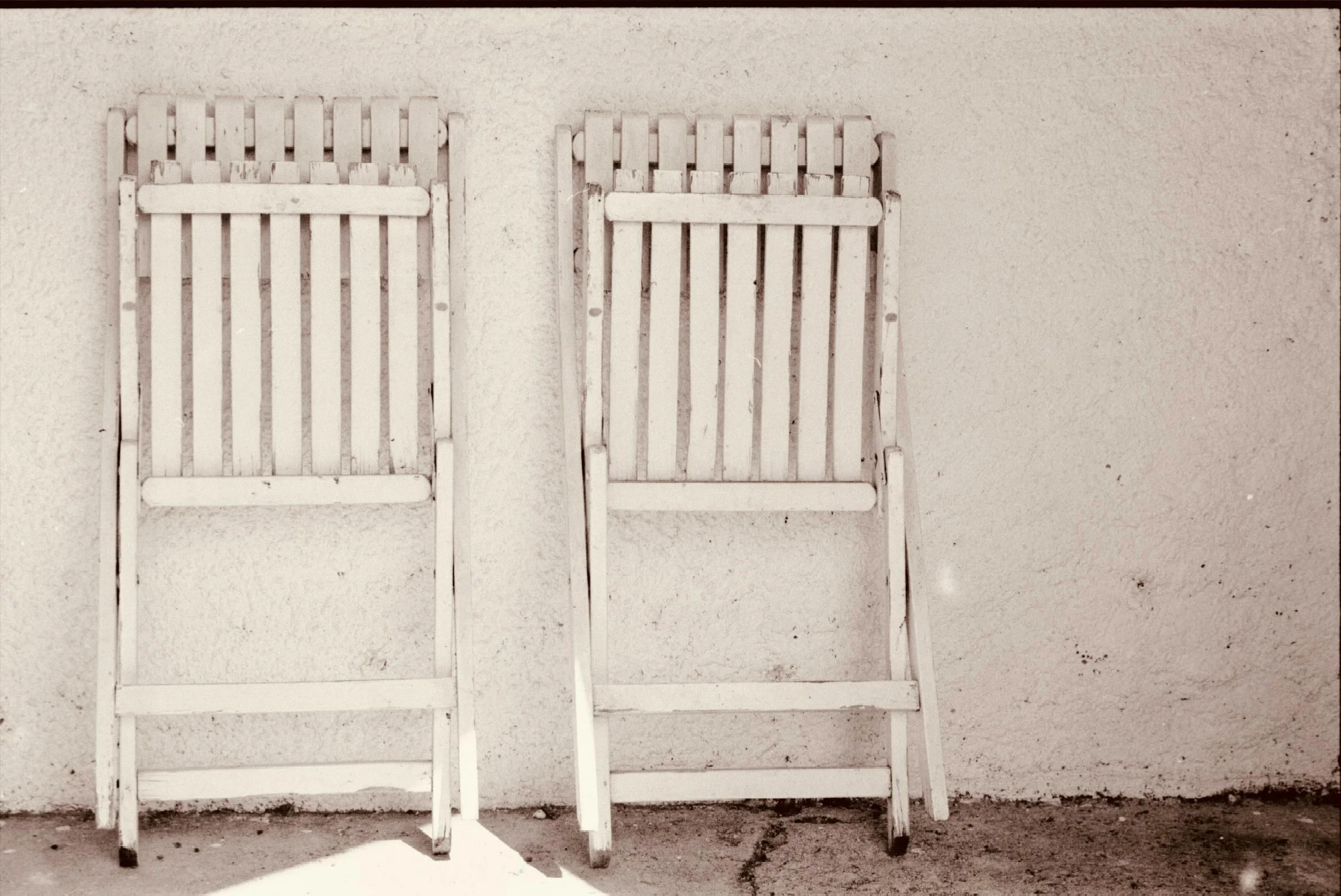
Two wooden folding chairs by Emmanuel Codden.
The Slow Evening
After the public pool closes, after the park empties, after dinner plates have been cleared and the heat begins to lift slightly from the pavement, the season settles into its evening rituals.
This may be where summer feels most distinct from the rest of the year: not in grand events, but in the permission to linger.
A porch dinner that stretches well past sunset. Novels read one chapter at a time beneath weak lamplight. Card games played slowly enough that nobody remembers who is winning. Children catching lightning bugs in jars, or making up games, or causing general mischief together. The sound of baseball drifting faintly from a radio somewhere nearby. Dollar-store candles burning down beside citronella coils while thunderstorms gather in the distance.
The slow evening depends upon a kind of collective unhurriedness that has become increasingly rare. During the colder months, evenings tend to contract around productivity and retreat. Summer reverses this instinct. The sun refuses to set early. People remain outside longer than necessary. Conversations wander. Reruns play quietly in the background with the windows open. The night itself becomes part of the living space.And unlike so much contemporary leisure, these evenings resist documentation.
To build a cheap summer, it may be necessary to protect these slower evenings deliberately. To leave certain nights undesigned. To resist filling every warm weekend with plans substantial enough to justify themselves afterward. A thunderstorm watched from the porch can be enough of an occasion. So can soft music from an open window, a game of cards, or scoops of the cheap ice cream eaten outdoors after the temperature finally drops below eighty.
The inexpensive summer thrives in these moments because they cannot be rushed without dissolving entirely. Their value lies precisely in their slowness, their repetition and their relative uselessness. They ask for nothing beyond time, attention, and a willingness to remain present a little longer after dark.
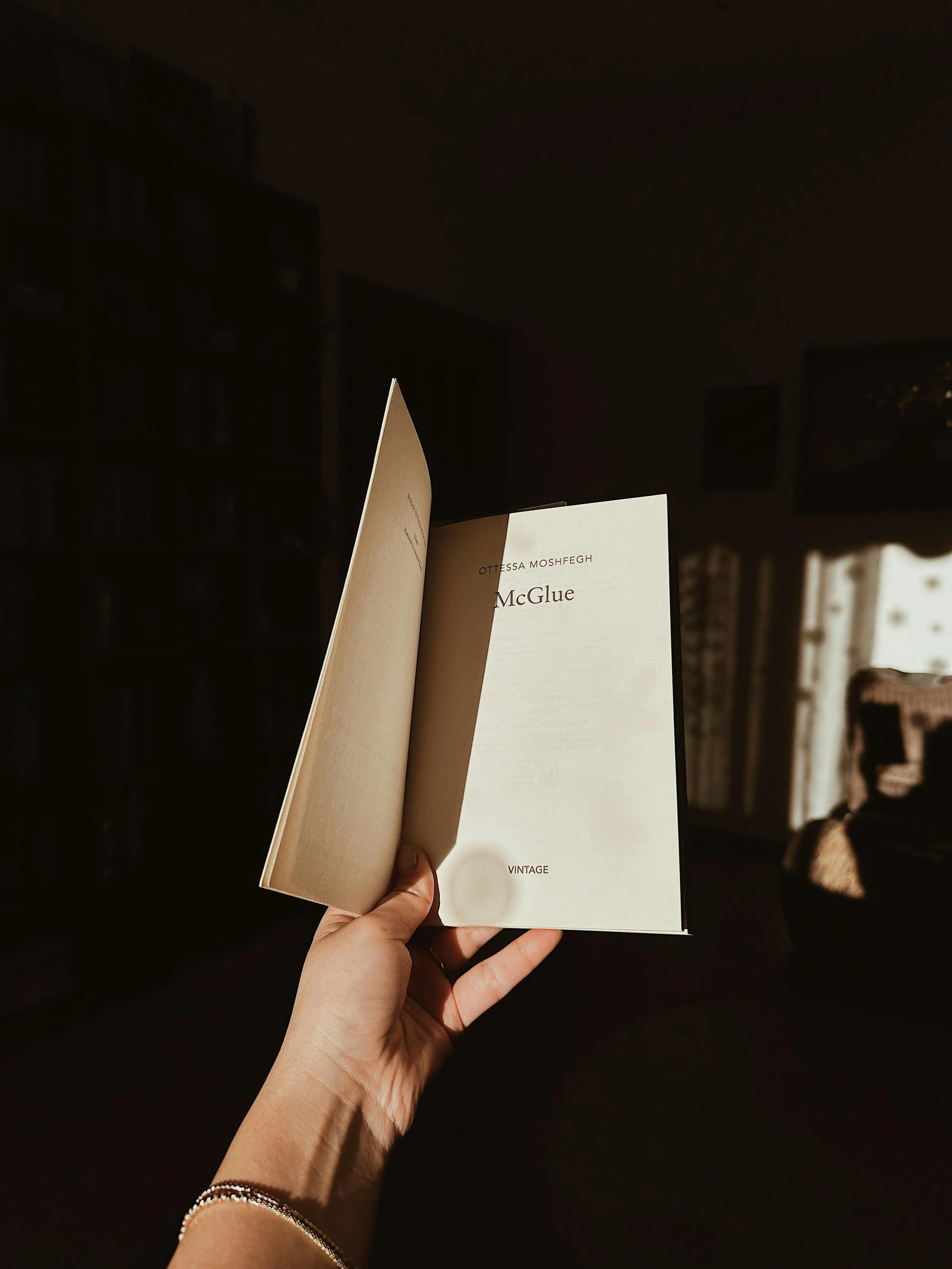
McGlue, a book by Ottessa Moshfegh
Objects Worth Returning To
The cheap summer also tends to revolve around a small cast of recurring objects, not expensive purchases so much as seasonal companions. The things pulled back into use each June and returned to closets or garages by September carrying new stains, scratches, and associations from the months before.
A folding lawn chair. A picnic blanket that permanently smells faintly of grass. Paperback classics. A market tote. An old thermos. A cooler dragged repeatedly to beaches, parks and fireworks shows until the hinges begin to loosen.
These objects matter less for their quality than for their continuity. Unlike the endless churn of trend-driven summer consumption, they improve through repetition and familiarity. The cheap summer is rarely built from entirely new things living in your Amazon cart. More often, it emerges from rediscovering what already exists in the hall closet, garage, or kitchen drawer. Failing that, the thrift shop.
The cheap summer thrives on this kind of reuse because it shifts attention away from acquisition and toward atmosphere. The goal is not to assemble an idealized seasonal aesthetic from scratch, but to allow a handful of familiar objects and rituals to accumulate emotional texture through repeated use.
Summer as Ritual, Not Achievement
Perhaps the real appeal of the cheap summer is that it quietly rejects the idea of summer as achievement.
Not every season needs to become a transformation narrative. Not every warm evening must justify itself through productivity, travel, documentation, or self-improvement. Some summers will contain trips and milestone experiences, certainly. But the seasons people often carry most vividly are built from smaller repetitions that gradually acquire emotional weight through return. These rituals may appear insignificant in isolation. Their meaning accumulates slowly, almost invisibly, across the season.
And perhaps that is the deeper lesson hidden within the inexpensive summer: atmosphere and depth is usually created through recurrence rather than novelty.
A cheap summer does not require abstention from pleasure or a romantic performance of simplicity. It asks only for a shift in emphasis. Fewer attempts to maximize the season. More willingness to inhabit it repeatedly. To choose a handful of rituals and allow them to deepen through use instead of constantly replacing them with newer, more optimized experiences.
Keep peaches on the counter. Visit the library weekly. Leave certain evenings unscheduled. Eat outside when possible. Return to the same park, the same diner, the same porch chair often enough that the repetition itself begins to feel comforting rather than monotonous.
Over time, these modest acts start to stitch the season together. A season that feels inhabited rather than consumed. One measured less by spectacle than by accumulation, thunderstorms, paperbacks, folding chairs, soft serve, distant fireworks, until ordinary life begins to glow with the unmistakable atmosphere of summer itself.