

Stories
Literature


Myths & Legends






Handmade for the Haunting Season
Create a richly layered Halloween with crafts and décor inspired by haunted houses, windswept villages and old ghost stories.



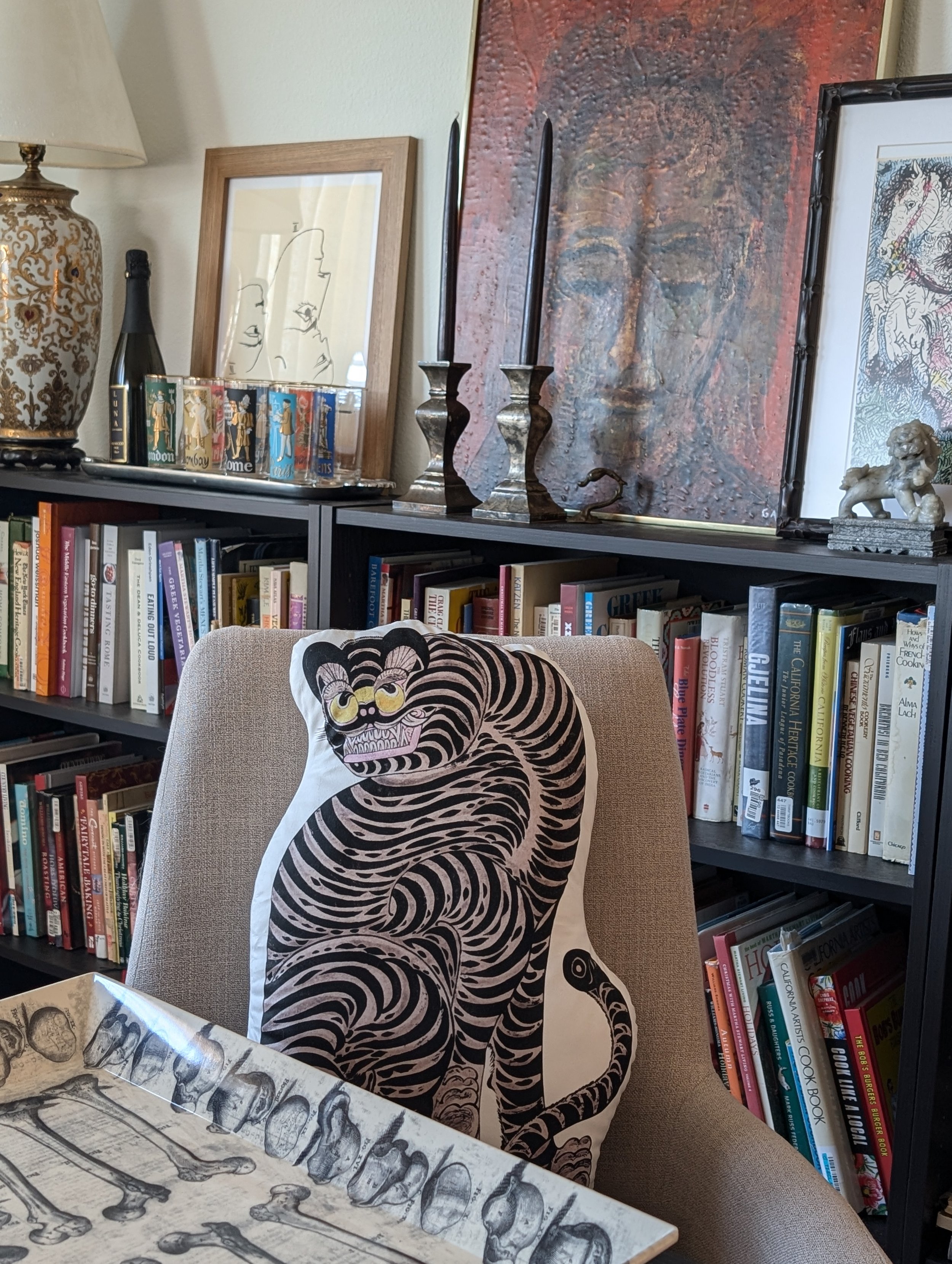
Part guardian, part apparition, the talismanic tiger prowls between worlds, its spiraling stripes more hypnotic than natural, its gaze at once comical and divine. In vintage Japanese folk art, tigers like this one were protectors, their exaggerated forms meant to ward off evil spirits and invite strength. Here, that same protective energy is rendered in soft polyester, a creature of both myth and domestic comfort.
Printed on one side, this 22-inch pillow retains the bold graphic charm of the original painting it’s based on, an emblem of good fortune and protection. Whether seated in an armchair or watching over a room, the tiger’s watchful eyes and curling form lend a note of the otherworldly to the ordinary.
• 22″
• Thickness: 3″–5″
• Printed on one side
• Sealed design without zipper
• 100% soft polyester
Spot wash with warm water.
Important: This product is available in the US only. If your shipping address is outside this region, please choose a different product.


Add a touch of mystery to your haunted house or gothic Halloween party with this interactive hidden message portrait. At first glance, it appears to be an ordinary framed antique portrait, but tucked inside her book is a folded note waiting to be discovered by curious guests.
Simply cut out the portrait, slip the included message through the hidden opening, and display it on a wall, mantel, or bookshelf as part of your haunted manor décor. Throughout the evening, guests may notice the note peeking from the frame and uncover its ominous warning: "Don't Trust the Pharmacist."
For even more intrigue, pair it with the companion portrait featuring the conflicting message "Don't Trust the Madame." Together they create a fun conversation piece, leaving guests to wonder which mysterious resident of the manor, if either, can be trusted.
• Sheet size: 24" x 36"
• Paper thickness: 10.3 mil
• Paper weight: 189 g/m²
• Opacity: 94%
• Paper is sourced from Japan