

A $30 Day in New York City: Folk Art and Central Park
A busy Maltese beach scene with sunbathers and colorful umbrellas on a sunny day.
Reader, there is still a New York summer day that feels improbably luxurious despite costing less than a cocktail downtown.
It is a day built not around reservations or exclusivity, but around movement: iced berry tea sweating onto paper maps, long walks softened by tree cover, the hum of Broadway drifting through open windows, and the small pleasures that make the city feel briefly cinematic again.
The Upper West Side remains one of Manhattan’s great neighborhoods for this kind of wandering. Summer seems to slow it slightly. Side streets smell faintly of sunscreen and bakery butter. Central Park fills with readers stretched across the grass and children orbiting the carousel in loose, happy circles. Grocery stores spill crates of stone fruit onto the sidewalk. The city’s harder edges soften beneath the heat.
Within only a few avenues, it is still possible to assemble an entire Saturday out of modest pleasures: a pastry eaten slowly near Columbus Circle, an afternoon inside cool museum galleries, shaded walks through the park, a Korean flatbread folded in foil paper, samples gathered from specialty markets, and, eventually, pizza eaten standing on the sidewalk as the evening crowd begins to form.
For locals, the itinerary offers a reminder that New York’s wildest luxury has always been access, the ability to move fluidly between cultures, cuisines, institutions, and neighborhoods in the span of a single afternoon. For visitors, it offers an alternative to the increasingly expensive mythology surrounding the city: a version of Manhattan that still rewards curiosity more than spending.
This one-day itinerary carries you from breakfast through golden hour pizza for around $30, with museums, park detours, overlooked shops, and plenty of spaces to linger in between. Bring a comfortable pair of shoes and a reusable water bottle; throughout the day, the city offers small mercies in the form of public fountains, cold air conditioning, shaded benches, and places to pause. The goal is not austerity, but richness through rhythm: knowing when to sit in the shade, when to wander, and when to spend just enough to make the day feel unforgettable.
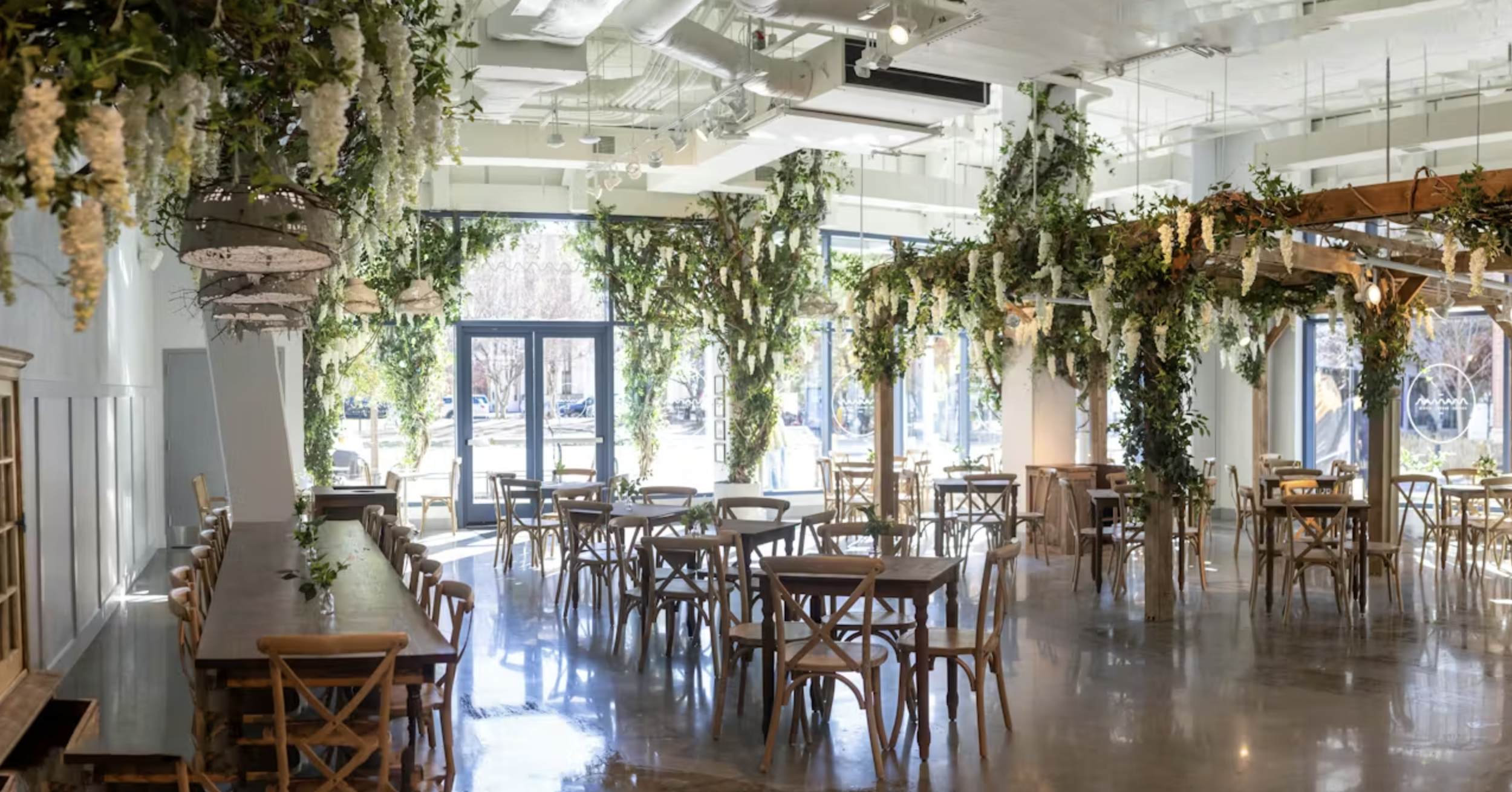
One of Maman's many New York City’s locations.
Enjoy a Leisurely Brunch at Maman
11:00 a.m.
Lincoln Square
152 Columbus Avenue
Summer in New York rewards those who begin the day early, before the sidewalks become crowded and the heat settles heavily between the buildings. Tucked beside Lincoln Center, Maman feels intentionally removed from the tempo surrounding it. The café leans into a kind of polished provincial charm: pale woods, climbing greenery, marble counters, and soft lighting that makes even a quick breakfast feel vaguely restorative.
Originally inspired by family recipes and southern French cafés, Maman has become something of a New York ritual stop: equal parts neighborhood bakery and aspirational refuge. In summer, the move is to keep things light and cold. A small iced crimson berry tea ($4) arrives deeply jewel-toned and slightly tart, while the pain au chocolat ($4) delivers exactly what it should: shattering pastry layers giving way to a soft, buttery center streaked with dark chocolate.
At $8 total, it is also one of the better breakfast values in the neighborhood, particularly given the setting. Sit for a while if you can. Watch the slow parade of runners heading toward the park, ballet students drifting toward Lincoln Center, tourists steadying their phones as they snap their own breakfasts at nearby tables. The goal of the morning is not efficiency. It is easing into the city gently enough that the entire day still feels open ahead of you.
Keeping It Under Budget
Skip additional drinks or brunch plates here, the pastry and tea are enough to carry you comfortably into midday.
Grab extra napkins and take your breakfast on a walk if seating is crowded.
Maman’s famous Nutty Chocolate Chip Cookie is tempting, but saving your budget for later food stops makes the day feel far more abundant overall. If you’re really craving it, make a big batch at home and indulge all week.
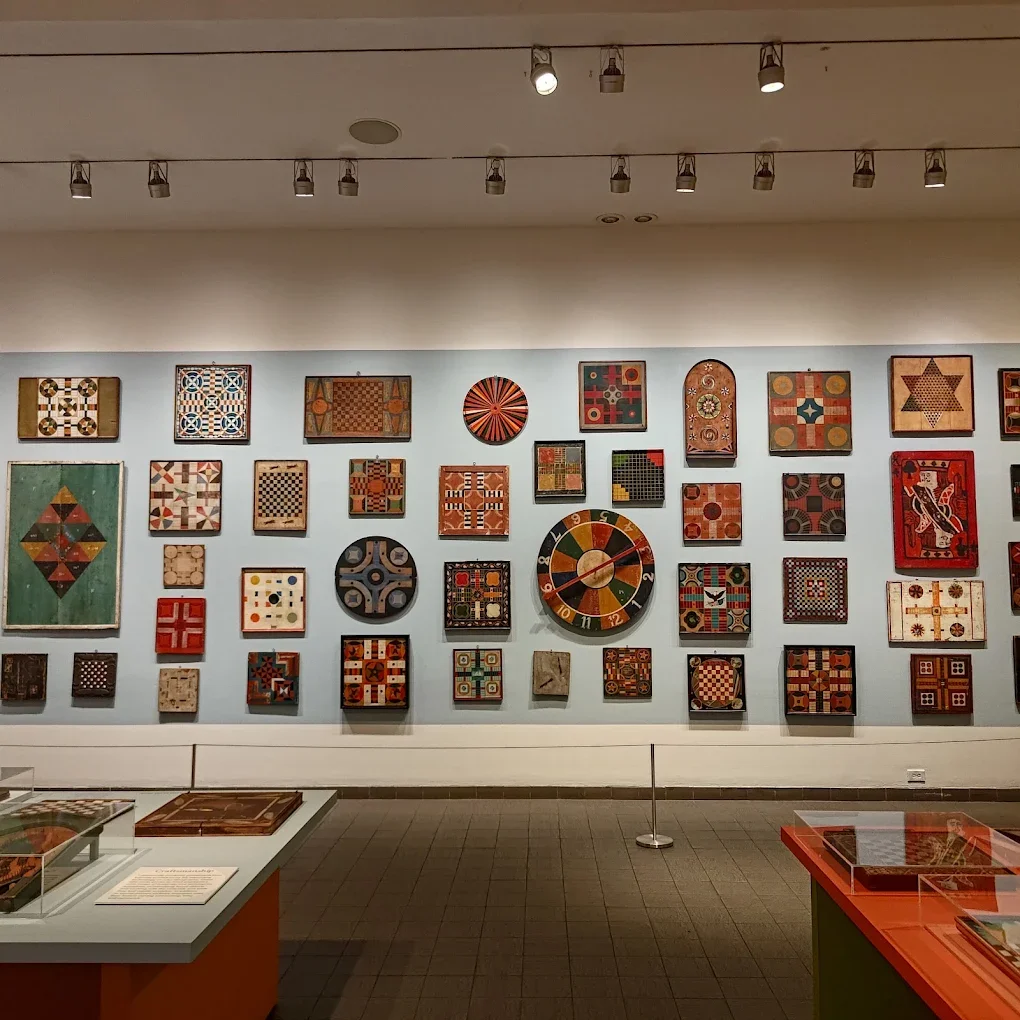
American Folk Art Museum in New York City.
Spend a Cool Hour at the American Folk Art Museum
11:30 a.m.
2 Lincoln Square
Columbus Avenue at West 66th Street
Just a short walk from breakfast, the American Folk Art Museum offers one of the city’s best cultural bargains: permanent free admission, air conditioning, and an atmosphere that feels notably quieter and more human-scaled than many of Manhattan’s blockbuster institutions.
In summer especially, the museum functions almost like a reset button. After the brightness and movement of Columbus Circle, its galleries feel contemplative and slightly transportive. Inside are hand-stitched quilts, weathered portraits, carved figures, handwritten signs, sculptures assembled from salvaged materials, and works by artists whose practices emerged outside formal institutions entirely. The collection spans centuries and continents, but what connects the work is a sense of personal vision, art made not necessarily for markets or prestige, but because someone felt compelled to make it.
The museum’s scale also works in its favor. Unlike larger institutions that can demand an entire afternoon, the Folk Art Museum can be comfortably explored in under an hour, leaving plenty of room for wandering afterward. Take your time with the quilts and the stranger contemporary works in particular; many feel unexpectedly modern despite their age, while newer pieces often carry the eccentricity of older folk traditions.
Keeping It Under Budget
Admission is always free, making this one of the most valuable stops in the city for budget-conscious visitors.
Use the museum as a cooling-off point before entering Central Park during the hotter part of the day.
Check the lobby for free pamphlets or exhibition materials instead of purchasing books or souvenirs from the shop.
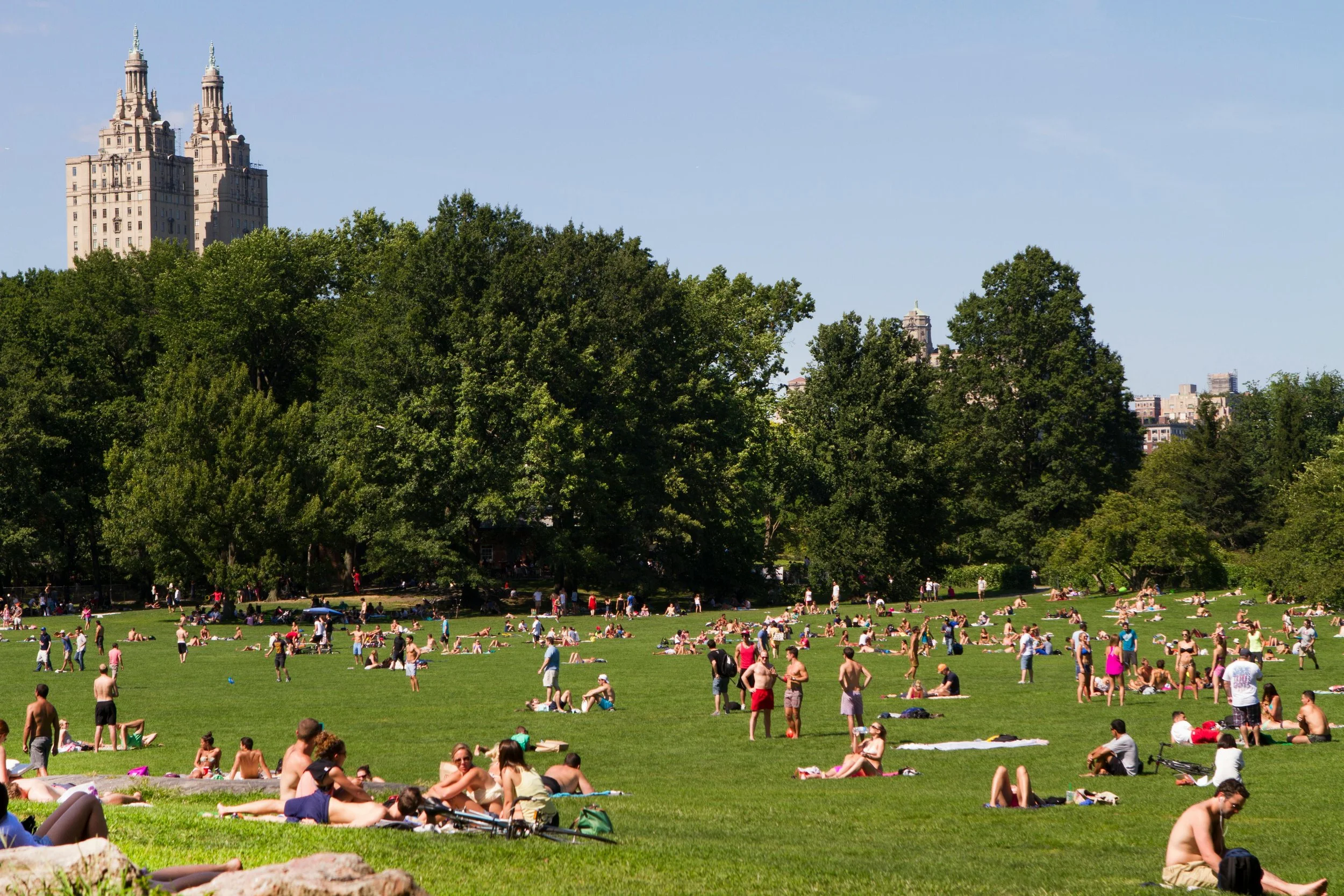
Sheep Meadow inside Central Park by Ramaz Bluashvili.
A Slow Loop Through Central Park
12:30 p.m.
From the museum, enter Central Park by following either 65th or 66th Street eastward into the park. The paths eventually merge into the sort of landscape New York still manages to make feel surprising: wooded trails opening suddenly into lawns, exposed rock formations appearing beside strollers and hot dog carts, fragments of wilderness threaded carefully through Manhattan gridlines.
Summer afternoons here are best approached without urgency. The goal is not to “cover” Central Park, but to drift through a few of its quieter pleasures before looping back toward Midtown and eventually the lowest corner of the UWS. Carry a reusable water bottle if you can, the park’s drinking fountains appear frequently along this route and offer both a practical reprieve from the heat and one of the city’s increasingly underrated luxuries: free cold water on a long summer walk.
Sheep Meadow
The first major stop is Sheep Meadow, the broad 15-acre lawn that has functioned for generations as one of the city’s communal living rooms. Today, the meadow fills with sunbathers, readers, picnic blankets, impromptu naps, and groups passing around iced coffees beneath the skyline.
Originally envisioned in the 1850s as part of the park’s Greensward Plan, the meadow was briefly intended as a military parade ground before designers Frederick Law Olmsted and Calvert Vaux pushed instead for something pastoral. Actual sheep grazed here until 1934, housed in the nearby sheepfold that later became Tavern on the Green.
The space still carries traces of that pastoral fantasy. Looking south from the grass, with the towers of Midtown rising behind the trees, the park achieves one of its most distinctly New York illusions: the feeling that the city has momentarily receded.
Roc d’Ercé
Near the southern edge of Sheep Meadow sits one of Central Park’s stranger and lesser-known cultural landmarks: Le Roc d'Ercé.
Known informally through immigrant history rather than official signage, the rock outcrop became a gathering place for migrants from the French Pyrenean village of Ercé during the late 19th and early 20th centuries. Many worked in restaurants across New York; others carried on the region’s tradition of bear training and performance. On Sundays, they gathered here to exchange news from home, socialize, and maintain a small cultural world within the larger city around them.
Today, the site feels almost invisible unless you know to look for it, simply another dramatic formation of Manhattan schist worn smooth by time and glacial movement. But that hiddenness is part of its charm. New York is full of these unofficial histories layered quietly beneath the surface.
Central Park Carousel
Continue southeast toward the wonderfully old-fashioned Central Park Carousel, where the sound arrives before the structure itself: calliope music drifting faintly through the trees.
The current carousel dates back to 1908 and originally operated in a Coney Island trolley terminal before being relocated to Central Park in 1951. Its hand-carved horses, painted in deep jewel tones, still move beneath a canopy of lights while children lean dramatically into each turn as though the ride were far more dangerous than it is.
Even if you do not ride, the carousel is worth lingering near for a few minutes. There is something almost defiantly sentimental about it, a surviving piece of turn-of-the-century amusement culture continuing beneath the trees while Midtown traffic hums just outside the park.
Cop Cot
Nearing the end of the walk is Cop Cot, a rustic wooden shelter tucked atop a rocky rise near the park’s southern edge.
Built in 1984 in the style of the park’s original rustic structures, Cop Cot feels unexpectedly secluded despite sitting only steps from some of Manhattan’s busiest streets. Covered in vines and shaded by trees, the structure offers a final quiet pause before re-entering the city grid.
José Julián Martí Statue
As you loop back toward Midtown near the Avenue of the Americas entrance, pause at the José Julián Martí Statue, one of the park’s most elegant and politically layered monuments.
Created in 1959 by the American sculptor Anna Hyatt Huntington (reportedly driven by personal interest and enabled by financial independence) when she was 81 years old, the equestrian statue depicts the Cuban poet, journalist, and revolutionary José Martí in the dramatic moment of his death during the Cuban War of Independence. Huntington, renowned for monumental public sculptures including Joan of Arc in Riverside Park and El Cid at Audubon Terrace, personally gifted the work to Cuba for installation in New York.
Yet the statue itself became entangled in Cold War politics. Although completed in 1959, escalating tensions between the United States and Fidel Castro’s Cuba delayed its installation until 1965. For years, the pedestal stood empty, a small but potent architectural reminder of geopolitical stalemate in the middle of Manhattan.
Today, the monument sits among a trio of Latin American heroes near Sixth Avenue, where traffic circles continuously around the park’s edge. In summer, the plaza often feels sun-soaked and overlooked, making it an unexpectedly peaceful place to stop briefly before returning to the city streets.
It is also a fitting final park stop for this itinerary. Like so much of New York, the monument contains multiple histories simultaneously: immigration, diplomacy, public art, exile, idealism, and the strange persistence of beauty even during political fracture.
Keeping It Under Budget
Central Park is the financial anchor of the itinerary: several hours of activity entirely free of charge.
Bring a reusable water bottle and refill it at fountains throughout the park rather than purchasing drinks from carts.
Resist the temptation to stop for snacks near the carousel, better food (and better value) waits later in the afternoon.
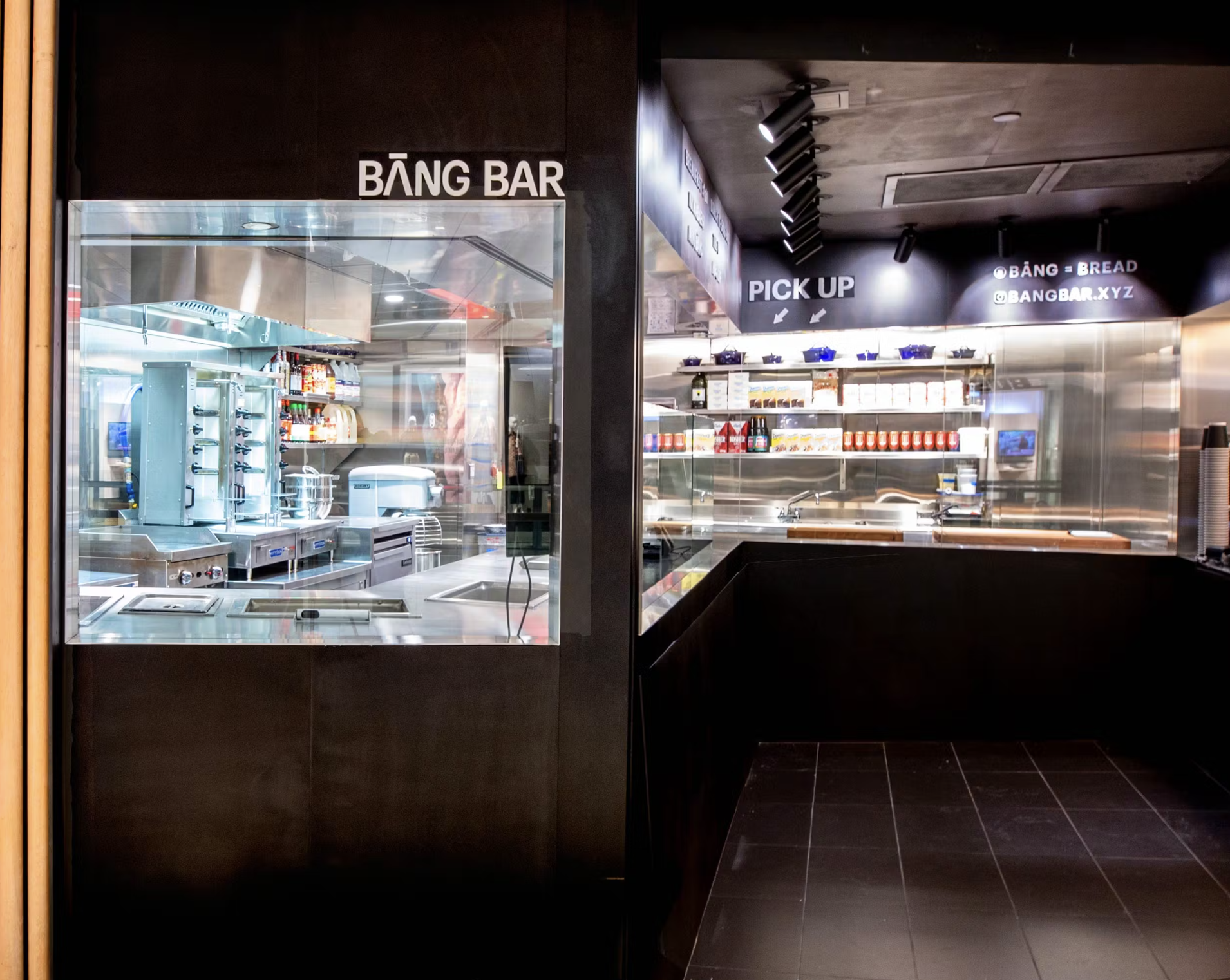
Bāng Bar at The Shops at Columbus Circle in New York City.
Grab a Bite to Eat at Bāng Bar and Escape Into the A/C
1:30 p.m.
The Shops at Columbus Circle
10 Columbus Circle, #301
Next, exit Central Park at West 59th Street and turn west toward Columbus Circle, where the glass towers and polished interiors of The Shops at Columbus Circle inside the Deutsche Bank Center.
Even if luxury shopping is not remotely part of the budget, the building itself remains worth wandering through. Cold air pours from the entrances. Escalators glide upward past perfume counters and designer storefronts. Tourists linger near the massive windows overlooking the southwest corner of Central Park. It is one of New York’s free pleasures: temporarily inhabiting a level of extravagance without actually purchasing it.
On the third floor sits Bāng Bar, David Chang’s (of Momofuku fame) fast-casual Korean-inspired wrap counter and, somewhat improbably, one of the most affordable meals inside the entire complex.
The ideal order here is the roast pork flatbread ($12): warm griddled bread wrapped around gochujang-marinated pork with pickled onions, cabbage, and sharp, savory sauces that manage to feel both rich and refreshing after several hours in the park. The teriyaki chicken and spicy eggplant versions are also excellent, particularly if you want something slightly lighter.
What makes Bāng Bar feel especially New York is its compression of influences. Korean flavors filtered through a luxury shopping center food counter by a chef famous for reshaping American dining culture, all served quickly enough to eat standing near the windows before continuing downtown.
It is also one of the itinerary’s strategic splurges. At $12, lunch consumes a meaningful portion of the budget, but the portion size, air conditioning, seating access, and sheer flavor payoff make it one of the better values in Midtown.
Keeping It Under Budget
Stick to the flatbread wraps rather than adding sides or drinks.
Refill your water bottle before leaving the park to avoid paying for beverages here.
Browse the upper floors and public seating areas freely, the experience of the space costs nothing.
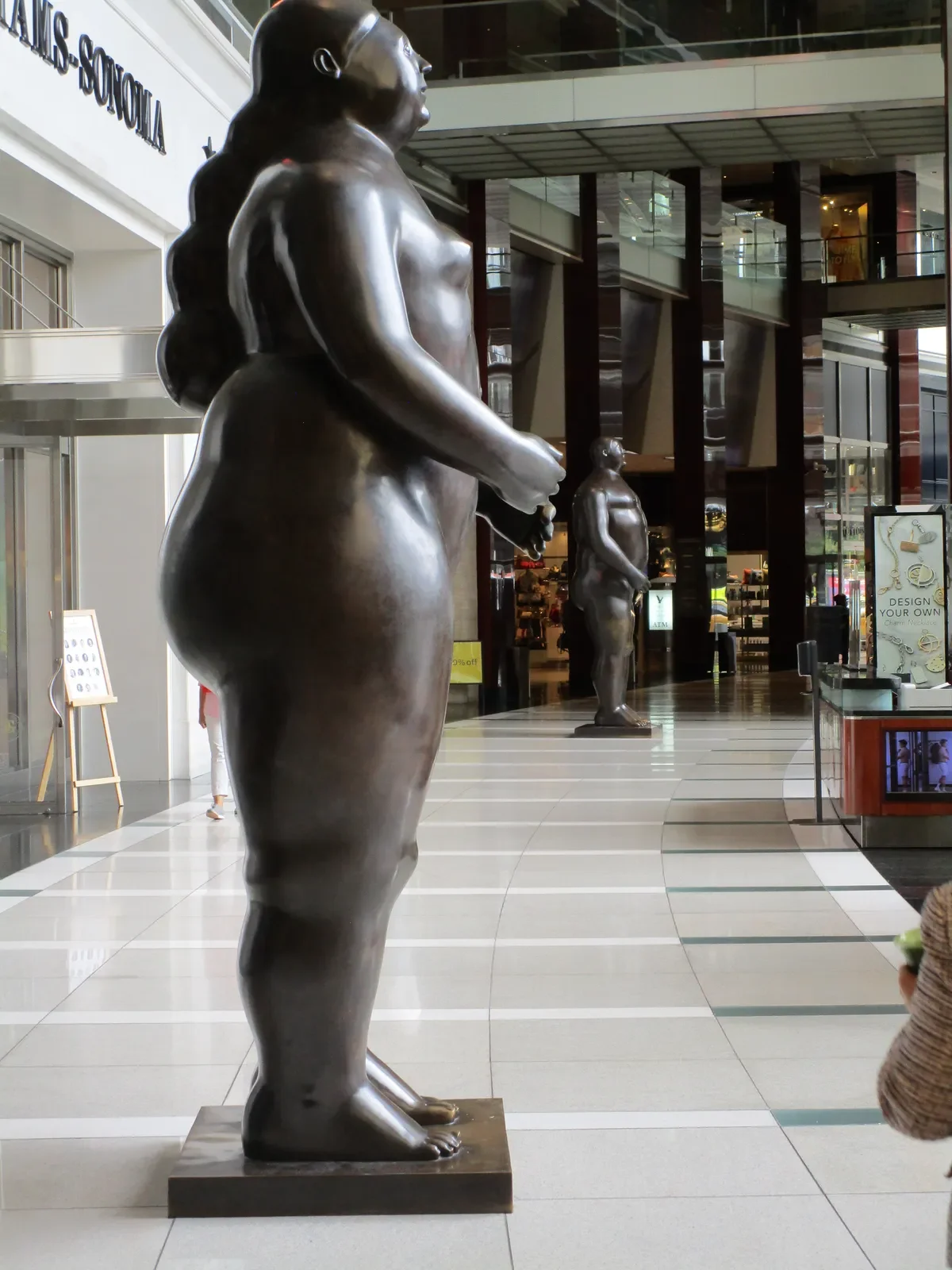
Botero’s Adam and Eve inside the Deutsche Bank Center. Photo by Atlas Obscura.
A Brief Detour for Botero’s Adam and Eve
10 Columbus Cir, New York, NY 10019
Before leaving Columbus Circle, spend a few extra minutes wandering through the atrium of the Deutsche Bank Center, where two monumental bronze figures by Fernando Botero quietly preside over the crowds below.
Installed in 2003, Botero’s towering sculptures of Adam and Eve have become one of the city’s more unexpectedly beloved public artworks. Standing more than twelve feet tall, the figures embody the Colombian artist’s signature “Boterismo” style: rounded forms inflated into something simultaneously humorous, sensual, and oddly majestic.
What makes the sculptures feel especially suited to New York is not simply their scale, but the way the public interacts with them. Unlike museum works guarded by distance and silence, these pieces exist directly within the flow of everyday life. Shoppers pause for photographs. Children circle the statues curiously. Tourists inevitably notice that Adam’s bronze anatomy has been polished to a bright gold sheen after years of being rubbed for supposed good luck.
There is something refreshingly unserious about the entire scene. Amid luxury storefronts and expensive restaurants, Botero’s figures interrupt the atmosphere with warmth and absurdity. They invite touch, laughter, and participation rather than reverence.
If the city can occasionally feel over-curated or overly optimized, these sculptures remain delightfully human-scale in spirit despite their enormous size, playful reminders that public art does not always need to be solemn to become memorable.
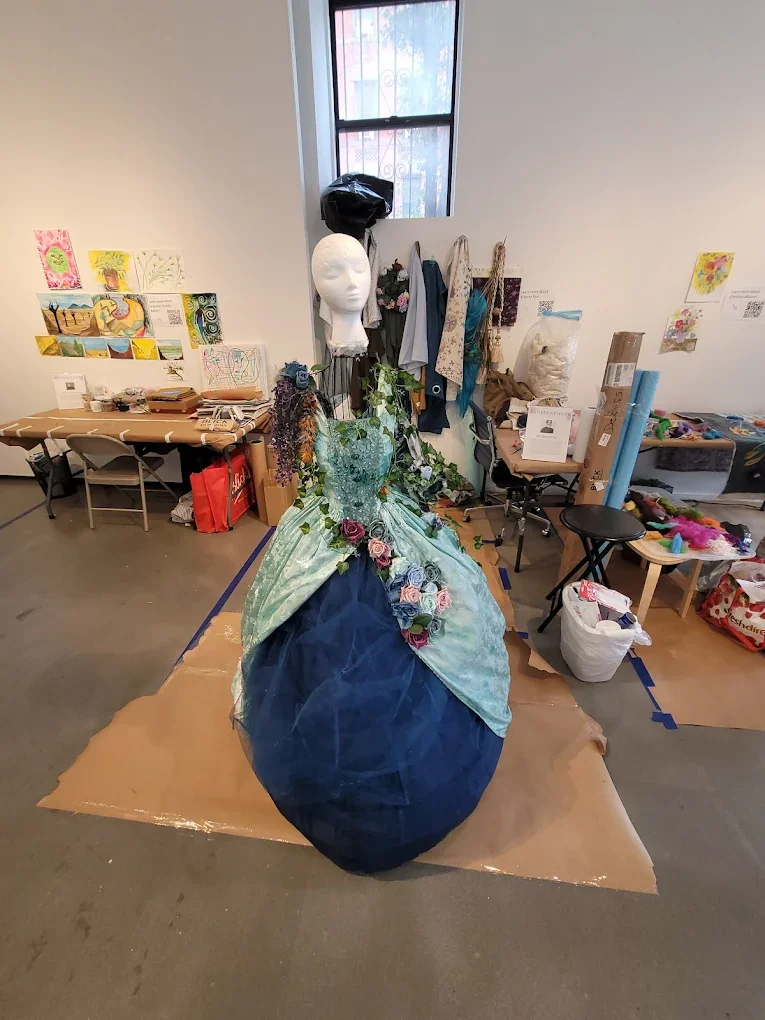
Fountain House Gallery in New York City.
An Afternoon Stop at Fountain House Gallery
2:30 p.m.
702 9th Avenue
From Columbus Circle, continue downtown along Ninth Avenue toward Fountain House Gallery & Studio, a smaller and often overlooked gallery space.
Founded in 2000 by Fountain House, the nonprofit gallery supports contemporary artists living with mental illness, exhibiting work that ranges from intimate drawings and paintings to ambitious large-scale pieces by both emerging and established artists. Some artists arrive through formal training, others through deeply personal creative practices developed outside traditional institutions. The result is a gallery that feels refreshingly unconcerned with art-world posturing.
After the more historical lens of the Folk Art Museum earlier in the day, Fountain House offers a compelling contemporary counterpart. Both spaces center artists whose work emerges from intensely individual experiences rather than institutional expectations, and both quietly challenge conventional ideas about who is permitted visibility within the art world.
The gallery itself is modest and approachable, the sort of place where you can spend fifteen thoughtful minutes rather than committing an entire afternoon. In summer, it also provides another welcome stretch of air conditioning and calm before continuing your walk.
Keeping It Under Budget
Admission is free, making this another high-value cultural stop within the itinerary.
Resist the temptation to over-schedule; smaller galleries like this are best experienced slowly and spontaneously.
Think of the gallery less as a shopping stop and more as a place to discover artists and exhibitions you may not encounter elsewhere.
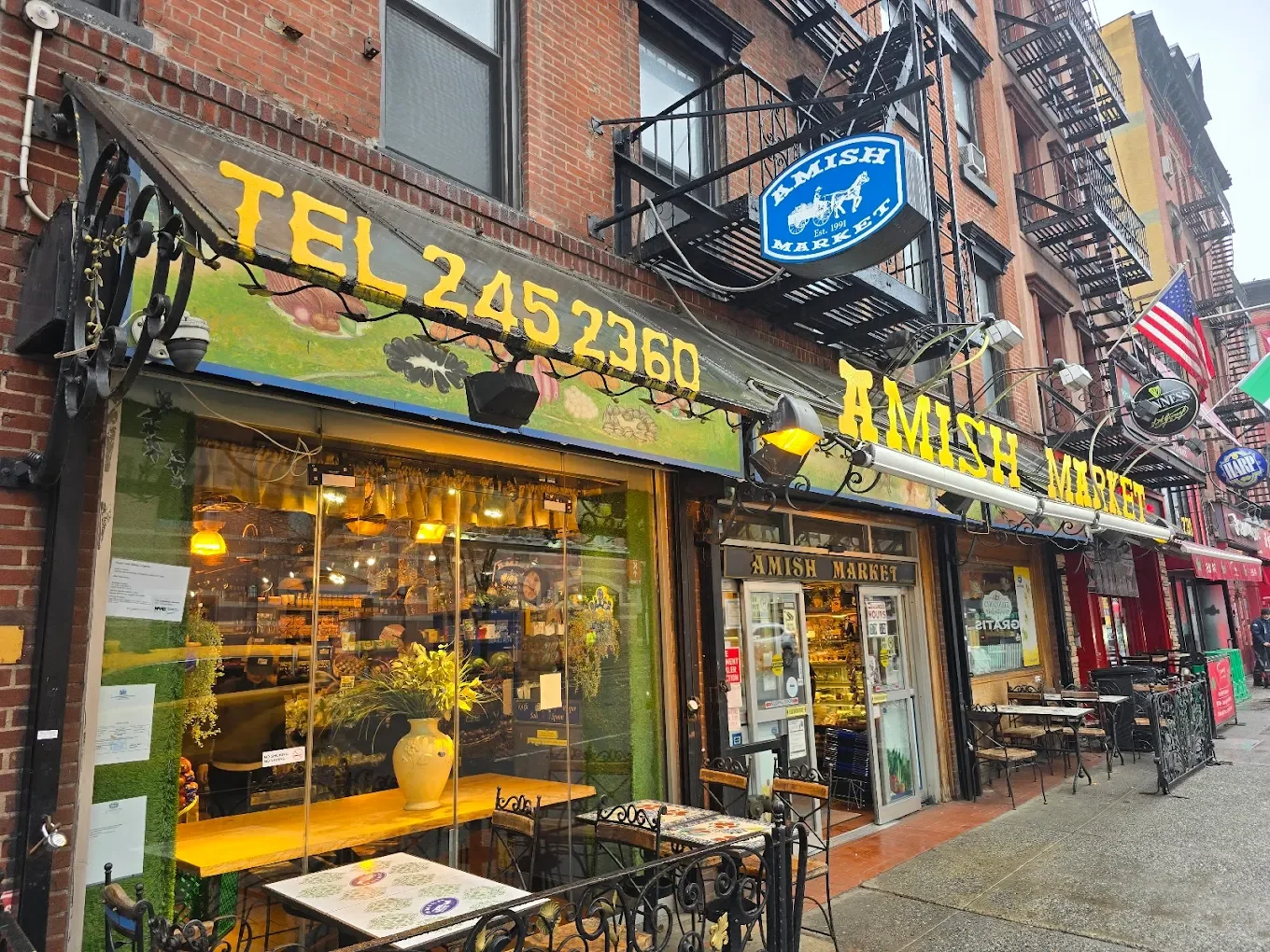
Foodie Paradise: Amish Market in New York City.
Window Shopping at Amish Market
2:30 p.m.
731 9th Avenue
Begin heading north again along 9th Avenue and make a brief stop inside Amish Market, one of those deeply New York grocery stores that feels like an edible archive of the city’s appetites.
Since the early 1990s, Amish Market has built its reputation on sourcing broadly and somewhat obsessively: local farm products alongside imported pantry staples, prepared foods beside specialty snacks, bakery counters next to juice bars and sushi cases. The result is a grocery store designed equally for hurried New Yorkers, homesick internationals, and curious food people looking for something unexpected.
Even if you buy nothing, it is worth wandering slowly through the aisles. Look at the cheeses and preserved fish. Scan the labels on olive oils and imported sauces. Make mental notes of regional farms, dairies, bakeries, and producers you may want to seek out later. In many ways, grocery stores remain one of the best free museums in New York, tiny maps of migration, taste, and aspiration assembled shelf by shelf.
Summer is also an excellent time to take advantage of the store’s sampling culture. Depending on the day, you may encounter small bites of fruit, cheeses, spreads, or prepared salads being offered near the counters. Consider it one of the itinerary’s unofficial snacks between meals.
Keeping It Under Budget
Treat Amish Market as a browsing stop rather than a grocery run, prices can climb quickly.
Free samples are part of the experience; enjoy them shamelessly.
Take photos of interesting brands, farms, or ingredients to revisit later rather than impulse-buying specialty products.
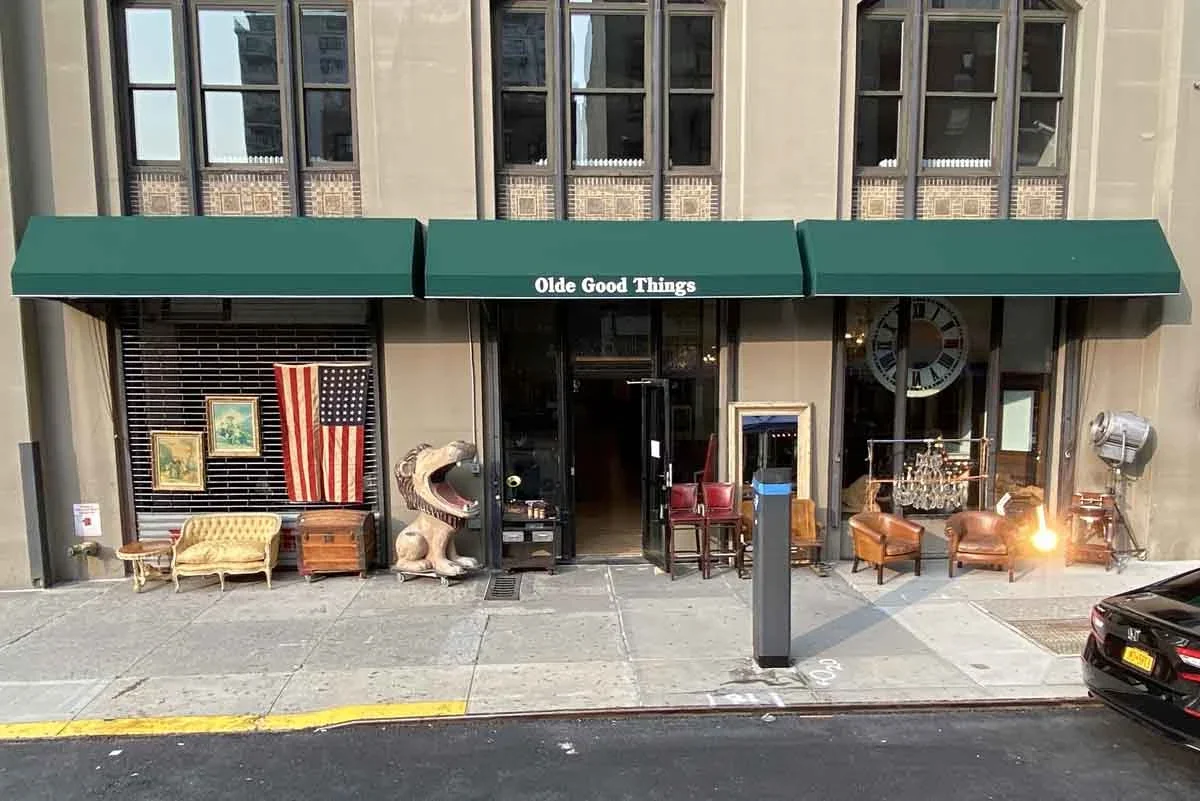
Olde Good Things storefront in Midtown Manhattan, New York City.
Wander Through Olde Good Things
2:30 p.m.
333 W 52nd Street
Just two blocks farther north, tucked between Midtown storefronts and apartment buildings, sits Olde Good Things, an architectural salvage warehouse disguised as an antiques store and one of the most entertaining free stops on the itinerary.
Inside, the space feels like a dense theatrical maze: chandeliers hanging overhead, stained glass stacked beside carved mantels, tarnished silver piled near church pews, antique hardware drawers beside marble fragments rescued from long-demolished buildings. It is the sort of place where you enter intending to browse for ten minutes and emerge nearly an hour later having mentally redesigned an imaginary brownstone.
Founded in the mid-1990s after its owners rescued a silver-plated coffee pot from a Manhattan dumpster, Olde Good Things grew into one of the country’s largest architectural salvage dealers by preserving pieces from disappearing American landmarks. Fragments from places like the Waldorf Astoria, the Plaza Hotel, the Flatiron Building, and historic department stores now live quietly inside its shelves and warehouses, waiting for second lives in homes, restaurants, and film sets.
Part of the pleasure here is scale. Very few places in New York still allow you to encounter objects this physically and materially rich without an admission fee attached. Brass elevator panels, carved limestone, massive theater lights, copper fixtures darkened with age, everything bears the weight of previous lives and previous rooms.
Keeping It Under Budget
Treat the store like a museum rather than a shopping destination.
Photograph maker’s marks, fixtures, or architectural details that inspire you instead of purchasing small souvenirs.
Look closely at the price tags attached to salvaged pieces from famous buildings, the stories are often as interesting as the objects themselves.
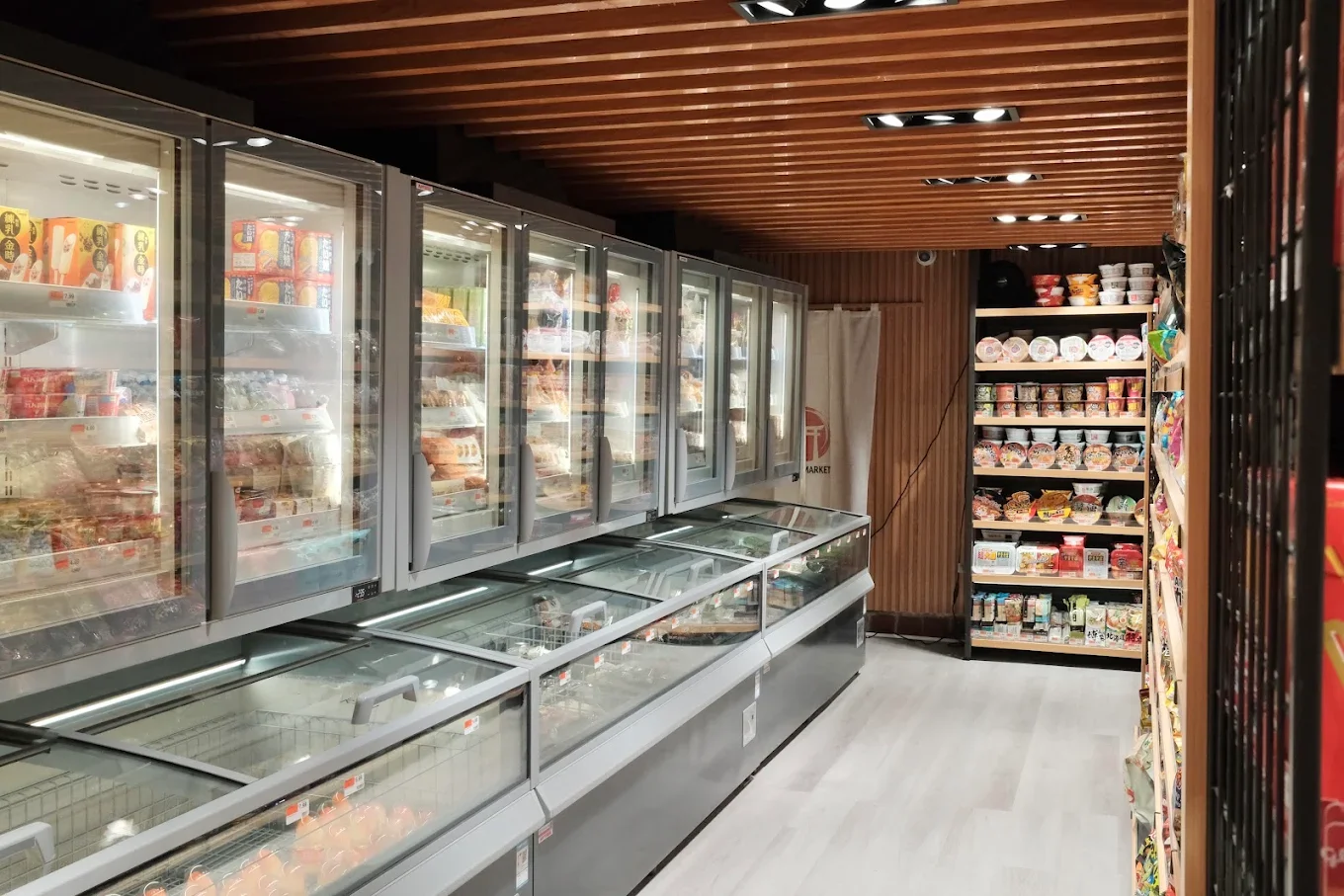
Hashi Mini Market ミニマーケット in Times Square, New York City
Explore Japanese Snack Culture at Hashi Mini Market
3:30 p.m.
858 8th Avenue
Just around the corner, make one final food-focused detour into Hashi Mini Market, a compact Japanese market that feels somewhere between a convenience store, specialty grocer, and miniature department store.
Where Amish Market reflects New York’s broader cosmopolitan appetite, Hashi offers something more specific and transportive: an immersion into Japanese snack culture and everyday food aesthetics. Shelves are lined with brightly packaged candies, bottled teas, instant noodles, curry blocks, rice crackers, seaweed snacks, and refrigerated desserts whose labels often remain delightfully mysterious to non-Japanese speakers. Nearby sit pristine bento boxes, trays of sushi, imported beauty products, kitchen tools, and meticulously wrapped pastries.
The key here is restraint. This stop is less about purchasing than about exploration, an edible form of window shopping. Wander slowly through the aisles and mentally bookmark things for future trips. Notice the packaging design, the seasonal flavors, the sheer specificity of products built around tiny pleasures and moments of convenience.
By this point in the itinerary, the day begins to take on a layered quality. French pastries in the morning. Korean flatbread at lunch. Japanese grocery aisles in the afternoon. New York’s luxury has always been this density of cultural overlap, the ability to encounter multiple traditions, histories, and flavors within a few city blocks and for very little money.
Keeping It Under Budget
Treat the visit like a tasting menu for future curiosity rather than a shopping spree.
Take photos of snacks or ingredients you want to seek out later.
If you do splurge, small bagged chips, teas, or single packaged candies tend to be the least expensive way to participate.
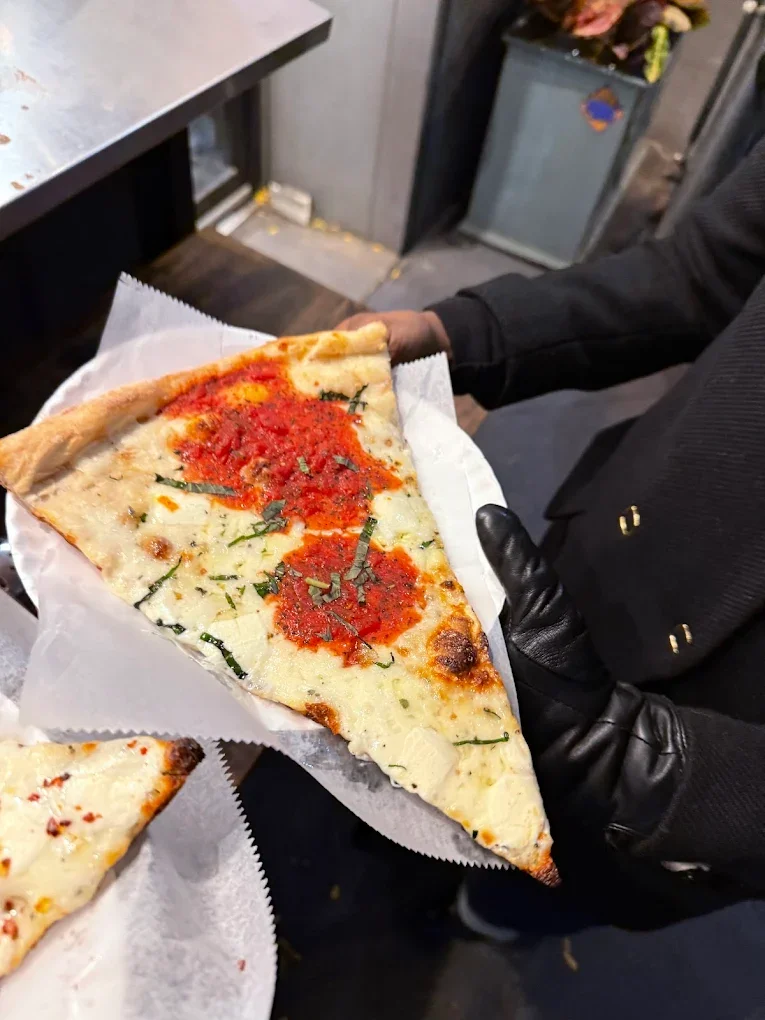
Pizza by the slice at Pop’s Pizza, New York City.
An Early Pizza Dinner at Pop’s
By late afternoon, begin easing toward the final stop of the day: Pop's Pizza, a small neighborhood slice shop best visited slightly earlier than standard dinner hours, before the post-theater crowds and evening rush begin to gather.
At around 4 p.m., the atmosphere still feels relaxed, it’s golden hour. Sunlight slants through the front windows. The counter has space to lean against comfortably. Delivery orders hum quietly in the background while pedestrians drift past outside. It is an ideal moment to lean for a few minutes and simply watch New York continue moving around you.
Pop’s represents a very particular category of New York pizza place: unpretentious, fast-moving, deeply local-feeling, and surprisingly serious about ingredients. The dough and sauces are made in-house. The slices arrive enormous and properly foldable, with thin crusts sturdy enough to eat standing up but soft enough to collapse slightly under their own heat.
The move here is balance: one classic cheese slice ($4), followed by one specialty slice ($6). The cheese slice delivers the baseline New York experience, aged mozzarella, bright tomato sauce, blistered crust, while the specialty slice allows for something slightly more excessive. The Pop’s Vodka slice, layered with creamy vodka sauce and fresh basil, feels especially satisfying after a long day of walking, though the pepperoni jalapeño version offers the kind of sharp, salty heat that pairs perfectly with summer humidity. Even the chicken Caesar slice, absurd on paper, somehow works.
There is something fitting about ending the itinerary with pizza. After a day spent moving through museums, parks, groceries, galleries, and luxury malls without spending very much at all, the city narrows again to one of its simplest and most enduring pleasures: a hot slice eaten quickly at a counter while the evening begins outside.
Keeping It Under Budget
Arriving before the dinner rush improves your odds of getting counter space and fresher specialty slices.
Skip sodas or bottled drinks if possible, you’ve already saved significantly throughout the day by refilling water bottles.
Two slices are more than enough for most people, especially after the day’s earlier stops and samples.