

Crispy Parthian Chicken
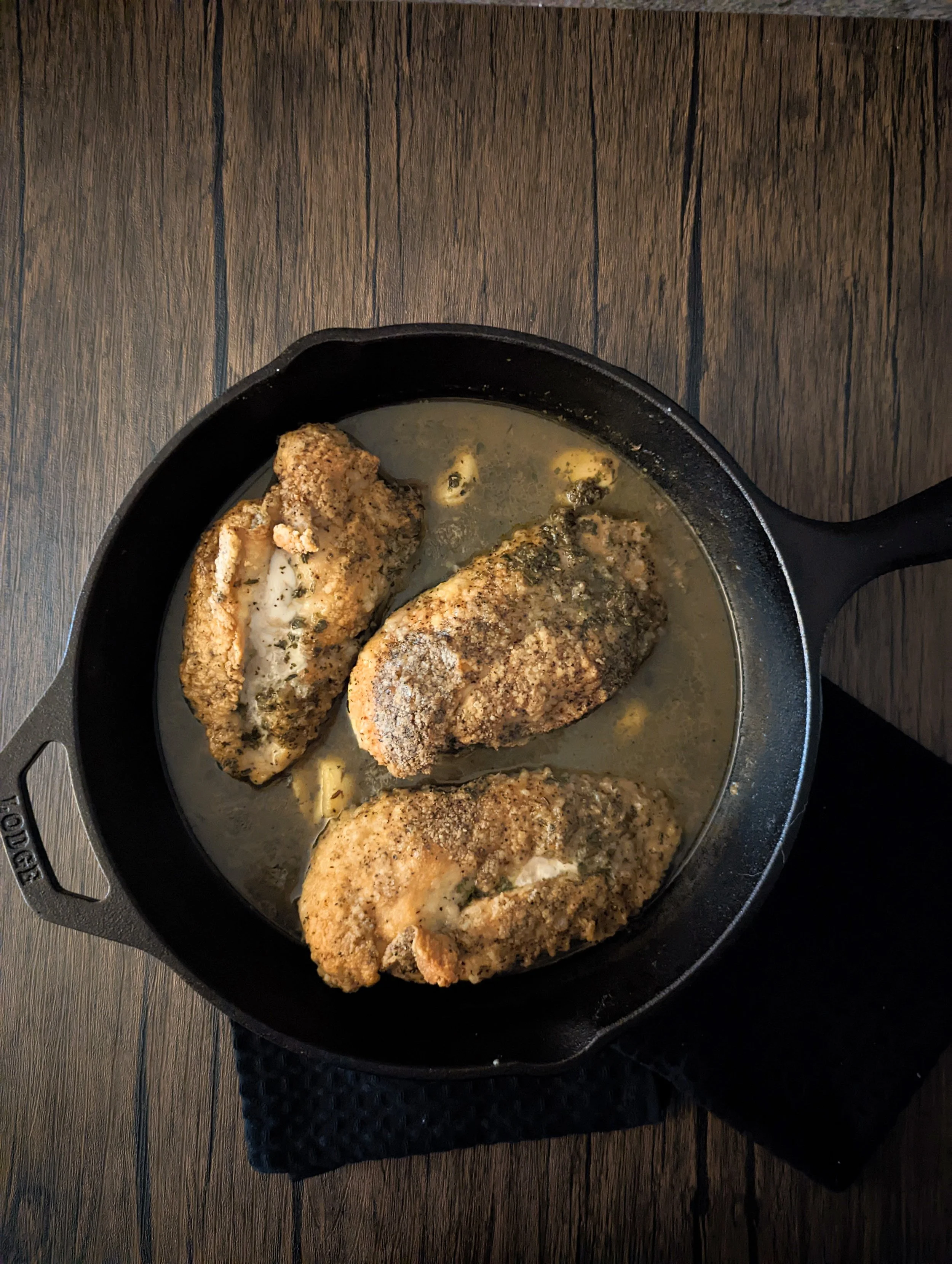
Crispy Parthian chicken, an ancient Roman recipe.
Long before recipes became standardized into tablespoons and oven temperatures, Roman cooks were writing down combinations of spices, sauces, and cooking techniques that still feel surprisingly recognizable today.
The collection now known as Apicius, or De re coquinaria, survives as one of the most important surviving records of ancient Roman cuisine, compiled sometime around the fifth century AD from much earlier culinary traditions.
Spread across ten sections devoted to subjects like seafood, vegetables, sauces, and meats, the text reveals a Roman appetite shaped not only by local agriculture but by empire, trade, and conquest. Ingredients and techniques moved constantly across borders. Pepper traveled from India. Wine sauces thickened with herbs appeared beside fermented fish sauces and dried fruits. Recipes borrowed freely from the cultures surrounding Rome, particularly those connected through major trade routes.
Pullum Parthicum, or Chicken Parthian-Style, reflects that exchange clearly. Found in Book VI, Aëropetes, the dish pairs fried chicken with a wine-based sauce flavored with pepper, lovage, caraway, and laser, the now-extinct resinous seasoning prized throughout the ancient Mediterranean world. The recipe’s name likely references the Parthian Empire, the major Iranian power that once controlled vast stretches of territory along the Silk Road between Rome and Han China.
Reading the recipe now, what feels most striking is not its unfamiliarity, but its familiarity. Fried chicken finished in an aromatic pan sauce hardly feels out of place in a modern kitchen. The combination of pepper, wine, herbs, and rich browned chicken remains deeply appealing two thousand years later.
The original text itself is sparse and occasionally cryptic, assuming a level of culinary knowledge that Roman cooks would have taken for granted. Measurements are nearly nonexistent. Instructions appear almost casually abbreviated. Yet beneath the fragments, a remarkably sophisticated food culture emerges, one deeply interested in layering acidity, spice, herbs, and richness together.
Below is the original Joseph Dommers Vehling translation of the recipe alongside a modern adaptation designed for contemporary kitchens.
Crispy Parthian Chicken (Original)
Directions
Dress the chicken carefully and quarter it. [1]
Crush pepper, lovage, and a little caraway [2], moistened with broth.
Add wine to taste.
After frying, place the chicken in an earthen dish. [3]
Pour the seasoning over it, add laser and wine. [4]
Let it assimilate with the seasoning and braise the chicken to a point.
When done sprinkle with pepper and serve.
Notes
Dr. Martinus Lister, who provided notes in the book’s 1705 publication, is of the opinion that the Pullus Parthicus is a kind of chicken that came originally from Asia, Parthia being a country of Asia, the present Persia or northern India, a chicken of small size with feathers on its feet, i.e., a bantam.
Pluck, singe, empty, wash, trim. The texts: a navi. Hum. hoc est, à parte posteriore ventris, qui ut navis cavus & figuræ ejus non dissimile est. Dann. takes this literally, but navo (navus) here simply means “to perform diligently.”
Tor. casei modicum; List. carei—more likely than cheese.
Cumana—an earthenware casserole, excellent for that purpose.
G.-V. laser [et] vivum.
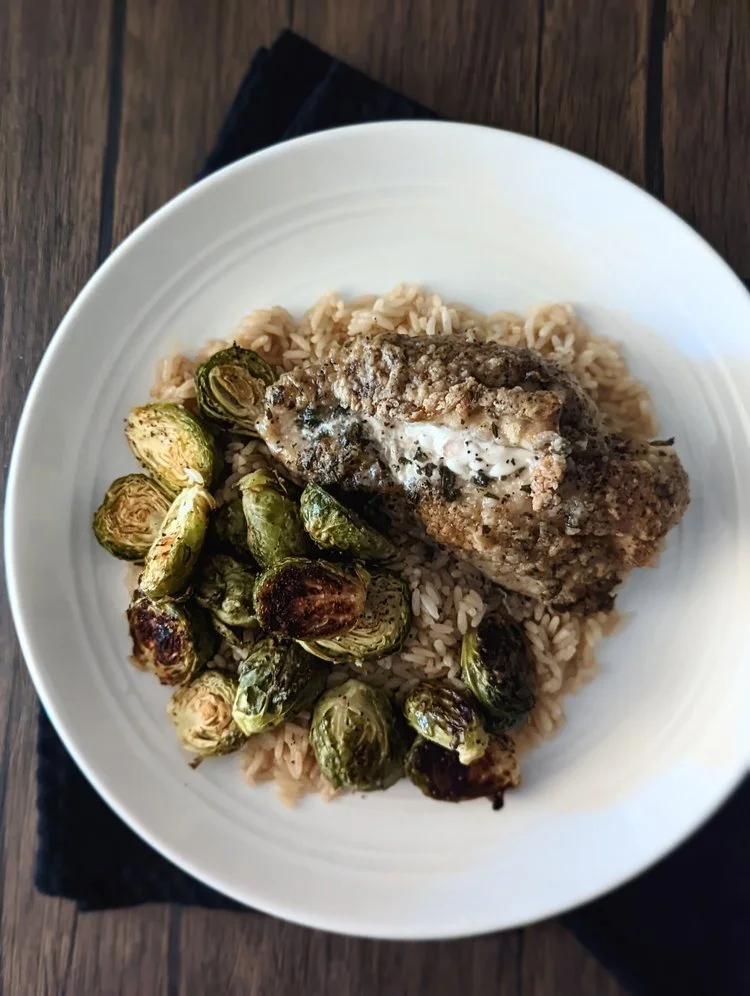
Crispy Parthian chicken with brown rice and roasted Brussels sprouts.
Crispy Parthian Chicken (Modernized)
Ingredients
1 lb. of boneless chicken breasts
1 tablespoon of olive oil
1 cup of white wine
1 cup of chicken broth
1 tablespoon of dried lovage (eliminate if pregnant)
1 teaspoon of black pepper
1 teaspoon of dried caraway
1 teaspoon of asafetida (a strong scented replacement for now-extinct laser)
Flour and additional salt and pepper
Directions
Preheat an oven to 425 degrees.
Heat olive oil in a cast iron skillet over medium-high heat.
Season chicken with salt and pepper and dredge in flour.
When the skillet is hot, add the chicken flour-side down and fry for 2-3 minutes or until golden brown. Turn and repeat.
Remove the skillet from heat and pour in the wine-herb mixture.
Place in the oven and braise for 25 minutes.
Serve over rice with the sauce over top.